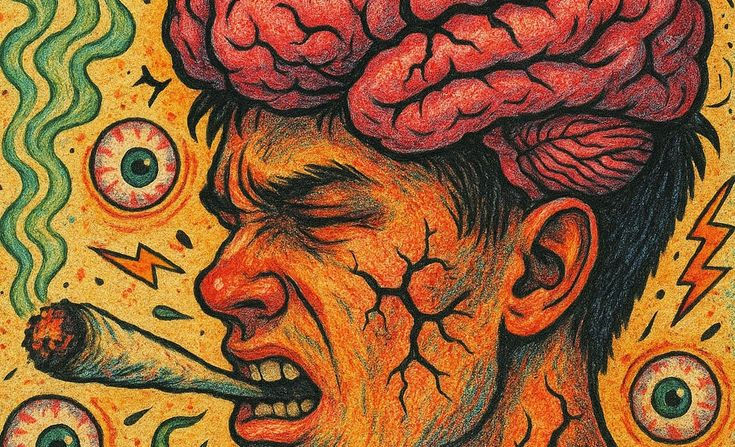
Psychological Effects of Long-Term Marijuana Use

A Blog by Collective Care Center, Pune
Marijuana, or cannabis, is often viewed as a harmless substance, especially among young adults and working professionals. While occasional use may feel relaxing, long-term and heavy consumption can gradually reshape the brain, influence emotional stability, and interfere with psychological well-being. At Collective Care Center, Pune, a psychiatric and therapeutic rehab centre with extensive mental-health expertise, we frequently meet individuals struggling with the subtle yet powerful psychological effects of chronic marijuana use.
How Long-Term Marijuana Use Affects the Brain
THC, the active compound in marijuana, interacts deeply with the brain’s endocannabinoid system—an internal network responsible for regulating mood, memory, motivation, stress response and decision-making. When THC repeatedly floods this system, it disrupts the natural communication between neurons. Over time, people may notice difficulty concentrating, frequent forgetfulness, or emotional instability. Daily users often describe a persistent “mental fog,” slower thinking, and reduced clarity, even when they are not intoxicated.
Research also shows that long-term marijuana use can alter the prefrontal cortex, the part of the brain responsible for judgment and impulse control. These changes are especially concerning in adolescents and young adults, whose brains are still developing.
Psychological Effects of Chronic Marijuana Use
One of the most common long-term effects is anxiety. Many individuals initially begin using marijuana to relax, but with regular use, anxiety often rebounds and intensifies. Some people experience sudden panic episodes, racing thoughts, or heightened paranoia. The brain, after being exposed to THC for months or years, becomes less effective at regulating stress naturally.
Another major concern is depression. Chronic marijuana use can blunt the brain's dopamine system—the mechanism that allows us to feel motivated, excited, or rewarded. As a result, people may lose interest in work, hobbies, or relationships. This “emotional flatness” is often mistaken for laziness, but it is an underlying neurochemical change caused by prolonged use.
Memory problems are also common. Long-term users frequently have trouble recalling conversations, following instructions, learning new tasks, or staying focused. These difficulties can interfere with academic progress, career growth, and daily functioning.
For some individuals, especially those with a genetic vulnerability, heavy marijuana use can trigger psychotic symptoms such as hallucinations, delusions, or intense paranoia. In certain cases, it may bring forward the onset of conditions like schizophrenia.
Sleep disturbances are another long-term consequence. While marijuana may initially help some people fall asleep, chronic use disrupts REM sleep, leading to poor sleep quality, vivid dreams, nightmares and insomnia when attempting to quit.
Impact on Working Professionals
At Collective Care, we see many working adults who rely on marijuana to unwind from high-pressure jobs. Although it may seem like a coping mechanism, long-term use often results in declining productivity, difficulty concentrating, mood fluctuations, fatigue and emotional burnout. Over time, cannabis becomes a psychological escape rather than a solution, making everyday challenges even harder to manage. Our specialised rehabilitation for professionals and working adults offers privacy, flexible scheduling and targeted support to address these challenges.
Can Marijuana Become Addictive?
Yes. Many people believe marijuana is not addictive, but clinical evidence shows that long-term use can lead to psychological dependence. Individuals may struggle to cut down, feel irritable or anxious without it, face sleep problems, or experience cravings. This condition, known as Cannabis Use Disorder, often develops gradually and quietly.
How Collective Care Center, Pune Helps in Recovery
At Collective Care, we provide comprehensive, person-oriented treatment for marijuana dependence. Our team includes certified counsellors for addiction recovery, clinical psychologists and psychiatric professionals who take an evidence-based approach to treatment.
Therapy at our centre focuses on rebuilding emotional regulation, strengthening coping skills, restoring cognitive clarity and addressing underlying causes such as stress, trauma or burnout. Through rehabilitation with clinical psychologists, clients receive therapies like Cognitive Behavioral Therapy, Motivational Enhancement Therapy, mindfulness-based relapse prevention and trauma-informed care. These approaches are supported by international research and form the foundation of evidence-based therapy for addiction.
Our centre also integrates holistic practices—yoga, meditation, breathwork and lifestyle restructuring—to promote deeper emotional stability. As a rehab centre with mental health expertise, we ensure that every individual receives a treatment plan tailored to their emotional needs, personality, work pressures and recovery goals. This approach is strengthened through personalised rehab plans at Collective Care, where every step of recovery is supported with compassion and clinical precision.
When to Seek Help
If marijuana use is affecting your mood, relationships, motivation, concentration or emotional balance, it may be time to reach out. Struggling to cut down, relying on cannabis for sleep, or feeling anxious and irritable without it are also signs that professional support may be necessary. Recovery becomes easier—and more effective—when addressed early.
Conclusion
Long-term marijuana use is not as harmless as many believe. Its psychological effects can subtly influence the mind, emotions and daily functioning, sometimes long before the person realizes it. At Collective Care Center, Pune, our mission is to offer compassionate, confidential and scientifically grounded support to help individuals regain clarity, stability and control over their lives.
Recovery is always possible—with the right guidance, a structured plan and a team that understands your journey.